
Moving to Germany is an exciting adventure, but finding the right place to live can be challenging. Renting a property involves several steps, and being well-prepared can make the process smoother. This guide aims to help Indian expats navigate the rental market and secure the perfect home.
Table of Contents
Determining Your Requirements
Before you start your search, it’s crucial to determine your specific needs. Here’s what you should consider:

- Location: Decide on the city or neighborhood you want to live in. Proximity to work, public transportation, and amenities should be key considerations. For instance, living near a U-Bahn station can significantly cut down on your commute time.
- Type of Property: Are you looking for an apartment, a house, or a shared flat (WG)? Each type of property offers different benefits and challenges. There are typically four types of property that you can rent in Germany.
- Studentenwohnheim (Student dorms) – dormitories for students
- Wohnungsgemeinschaft (WG) – A shared apartment among different individuals with separate rooms with common kitchen and bathroom.
- Private House – A private house for the whole family.
- Temporary House – Temporary houses to stay for few days before you find a permanent residence.
- Budget: Establish a clear budget for rent and additional costs. Tools like our tax and income calculator can help you understand what you can afford comfortably.
Before you dive into the rental market, it’s important to ensure that your expectations align with what the German rental market offers. From differences in property types to understanding the competitive nature of the market, having the right mindset can make your search much more effective.
Researching the Market
Understanding the rental market in Germany is essential to finding the right home. Before you begin your search, it’s helpful to get a broad overview of what to expect, including average rents, popular neighborhoods, and current housing trends. We recommend starting with our comprehensive guide, Navigating the German Rental Market: An Expat’s Guide, which will give you valuable insights into the overall rental landscape.
Once you have a general understanding, here are some specific steps to help you with your research:
- Average Rental Prices: Research the average rental prices in your desired area. Websites like Immobilienscout24, WG-Gesucht, and eBay Kleinanzeigen can provide a good overview.
- Rental Terms: Familiarize yourself with common rental terms. For instance, leases (Mietverträge) typically last for one year or longer, and tenants must give three months’ notice to terminate the lease.
Creating a Budget
Beyond the monthly rent, there are additional costs to consider:
- Utilities: Heating, electricity, water, and internet are usually not included in the rent. Ensure you budget for these separately.
- Security Deposit (Kaution): Typically, this is three months’ rent. To ease this burden, consider a Mietkautionsbürgschaft, which can help manage upfront costs.
- Advance Rent Payments: Be prepared to pay the first month’s rent in advance.

Property Features
When evaluating potential properties, consider these prioritized requirements:
- Kitchens: Many German rentals come without a fitted kitchen. Look for properties with kitchens installed or the option to buy the kitchen from the previous tenant.
- Elevators: If you have medical issues or small children, ensure the building has an elevator. Many older buildings do not.
- Garden or Balcony: Outdoor space can be a valuable asset, especially in urban areas.
- Window in the Kitchen: This is a common preference in Germany for ventilation and light.
- Storage Space: Adequate storage for belongings is essential, so check for built-in closets or storage rooms.
Documents Required for Rental Application
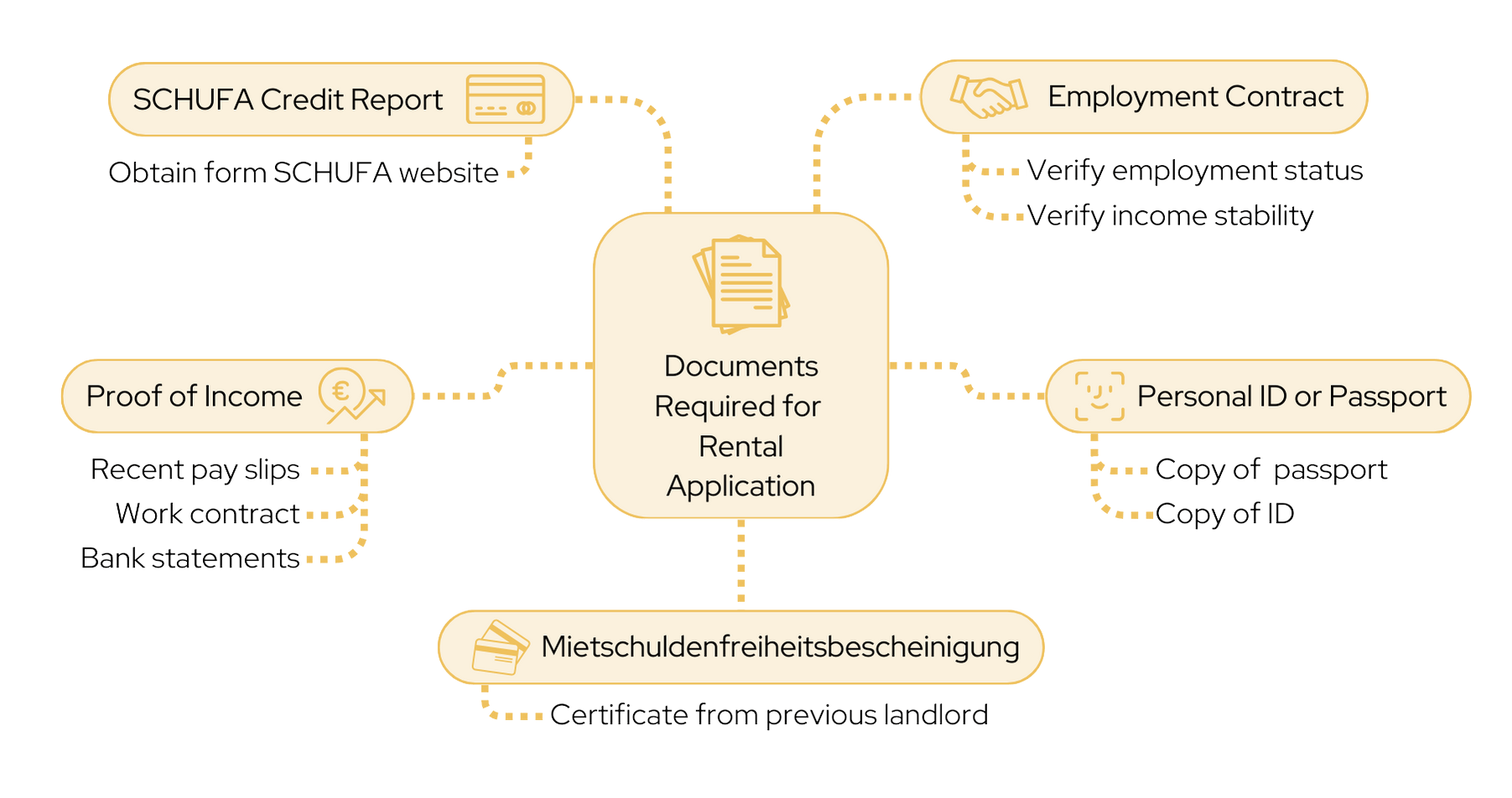
Landlords in Germany often require several documents to process your rental application. Be prepared with the following:
- SCHUFA Credit Report: This report provides information about your creditworthiness. You can obtain it from the SCHUFA website.
- Proof of Income: Provide recent pay slips, a work contract, or bank statements to demonstrate your ability to pay the rent.
- Personal ID or Passport: A copy of your identification is necessary for verification.
- Mietschuldenfreiheitsbescheinigung: This is a certificate from your previous landlord stating that you have no outstanding rent.
- Employment Contract: This helps to verify your employment status and income stability.


High Upfront Costs
The initial cost of renting can be high due to advance payments and the security deposit. Here’s how to manage them:
- Advance Rent Payments: Often, landlords will require the first month’s rent upfront.
- Security Deposit (Kaution): As mentioned, this can be up to three months’ rent. A Mietkautionsbürgschaft service can be a helpful tool to reduce this burden.
By considering these factors and planning ahead, you can navigate the German rental market with confidence. Ensure you have all necessary documentation ready, such as proof of income, SCHUFA credit check, and identification, to streamline the application process.
Key Terms and Abbreviations to look out for in Advertisements
| Term/Abbreviation | Meaning |
|---|---|
| Quadratmeter/QM | Square metres |
| Altbau/AB | Old Building |
| Neubau | New Building |
| Balkon/BK | Balcony |
| Einbauküche/EBK | Built-in Kitchen |
| Erdgeschoss/EG | Ground Floor |
| Gasheizung/GH | Gas Heating |
| Kaltmiete/KM | Cold Rent (Utilities and maintenance cost not included) |
| Nebenkosten/NK | Utility or maintenance Cost |
| Warmmiete/WM | Hot Rent (Utilities and maintenance cost included) |
| Wohngemeinschaft/WG | Shared Apartment |
| Zentralheizung/ZH | Central Heating |
| Mobiliert | Furnished |
Step-by-step Process for Renting a Property in Germany
- Find a rental property in Germany.
- Contact real estate agent, landlord or advertiser for viewing the property.
- Prepare documents to be submitted to sign the rental contract (Mietvertrag).
- Check and sign the contract.
- Transfer the deposit amount (Kaution).
- Get the keys and move to your new home.
Conclusion
In conclusion, renting a property in Germany requires careful preparation and understanding of local practices. By determining your requirements, researching the market, creating a budget, and considering property features, you can find a home that suits your needs and lifestyle. With these tips, you’re well on your way to settling into your new life in Germany.
Renting in Germany: A Step-by-Step Roadmap for Indian Expats
Below is an interactive guide to help you navigate each stage of renting a property in Germany. Click on any step to jump directly to the corresponding article.


About the Author: Madlene Herburg